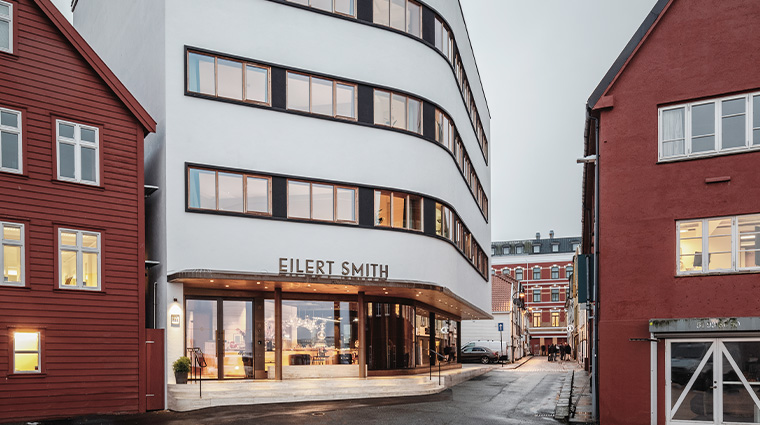
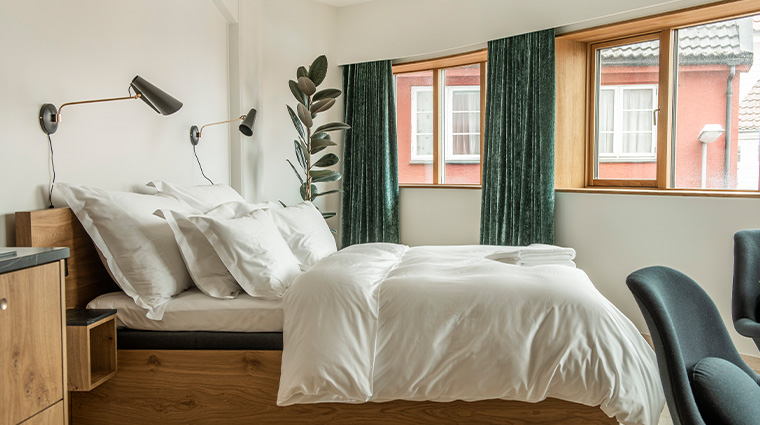
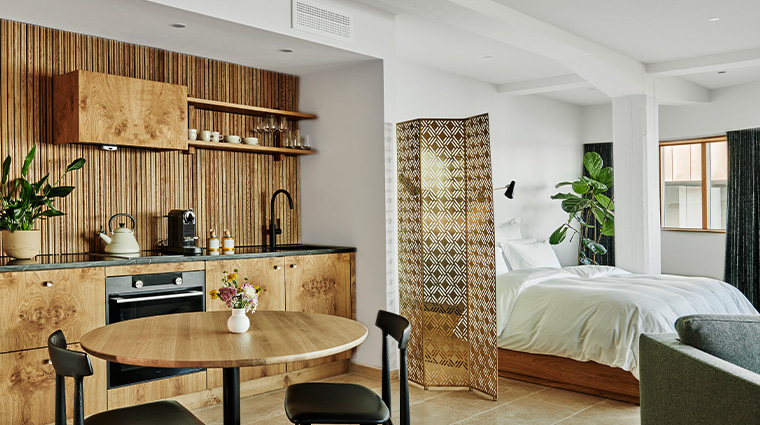
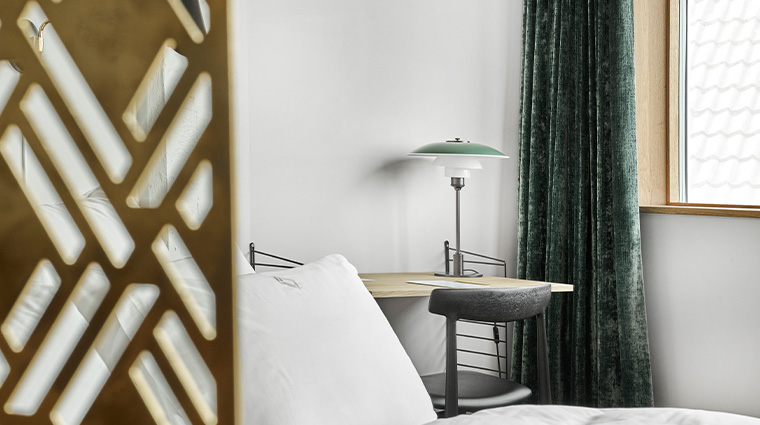
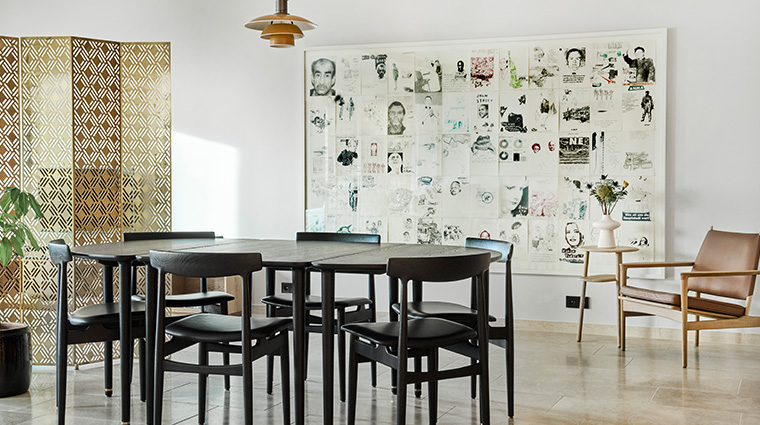
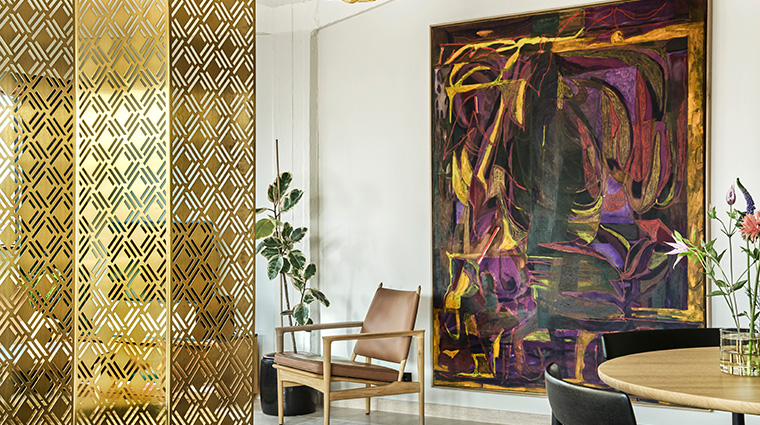
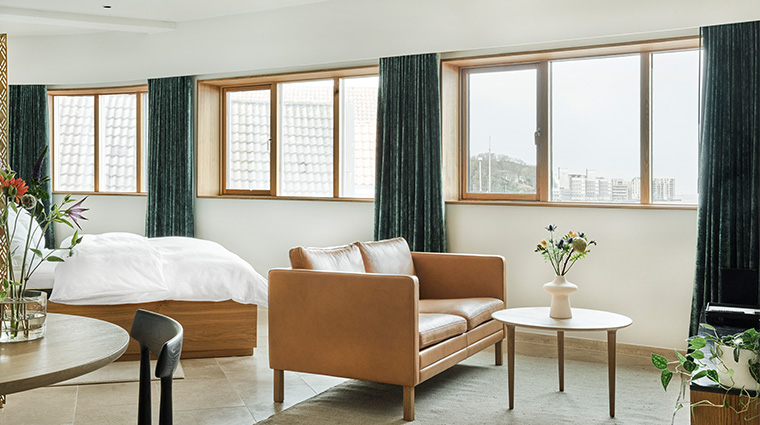
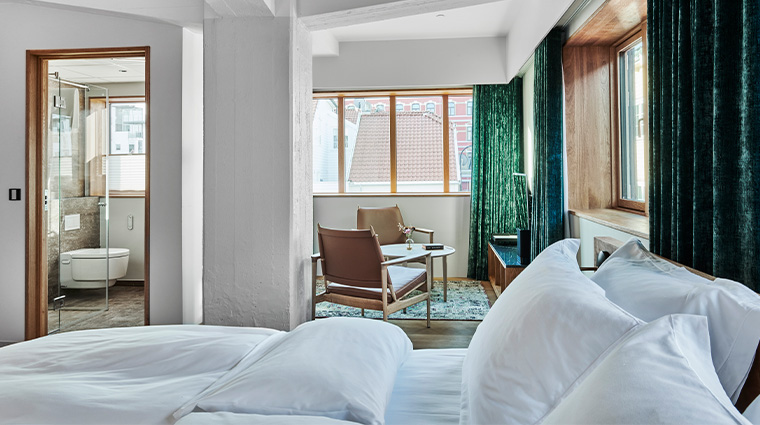
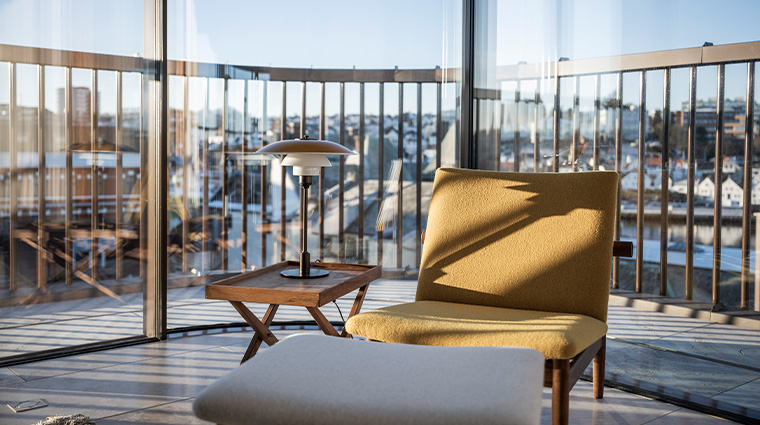
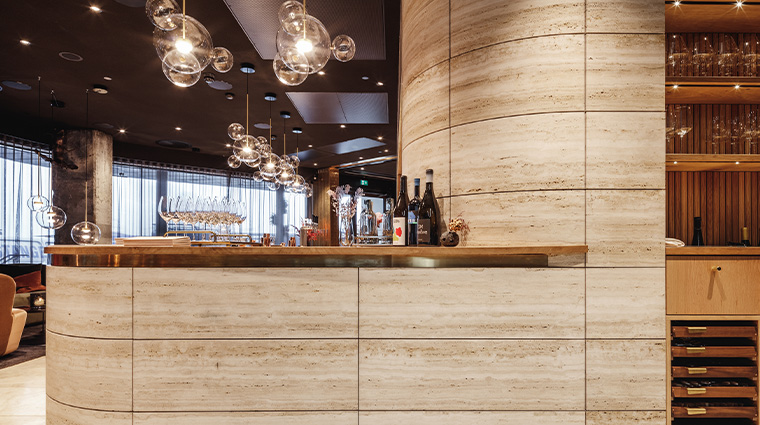
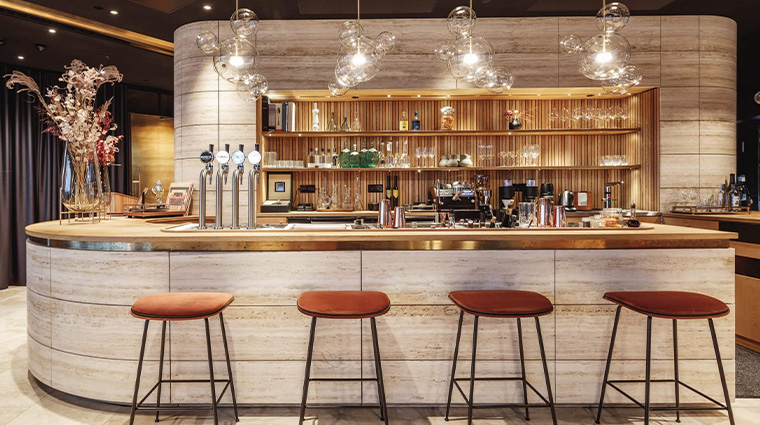
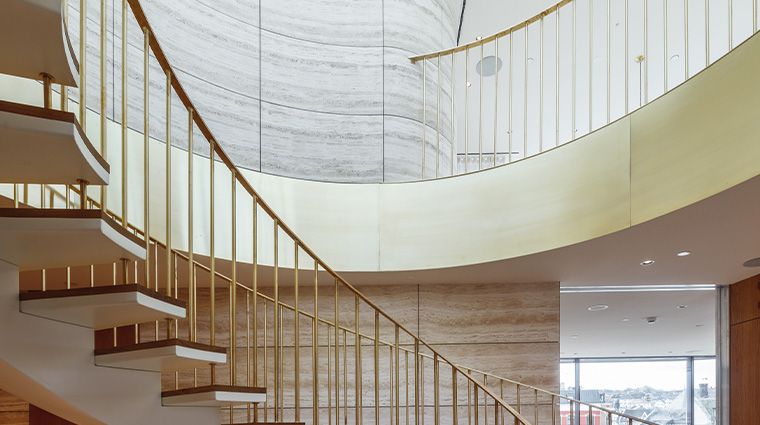
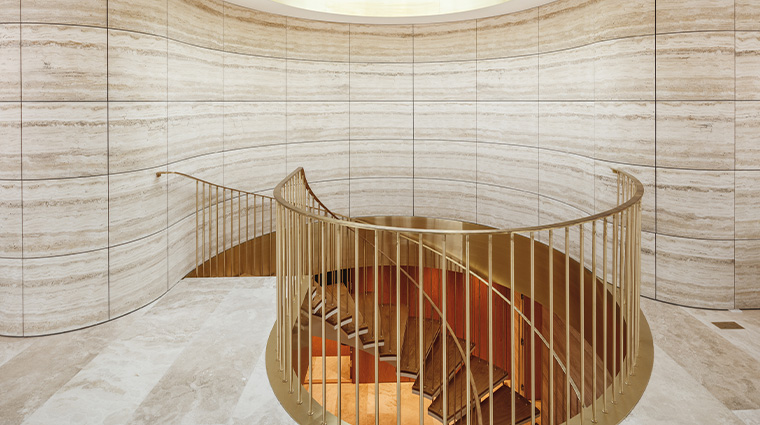
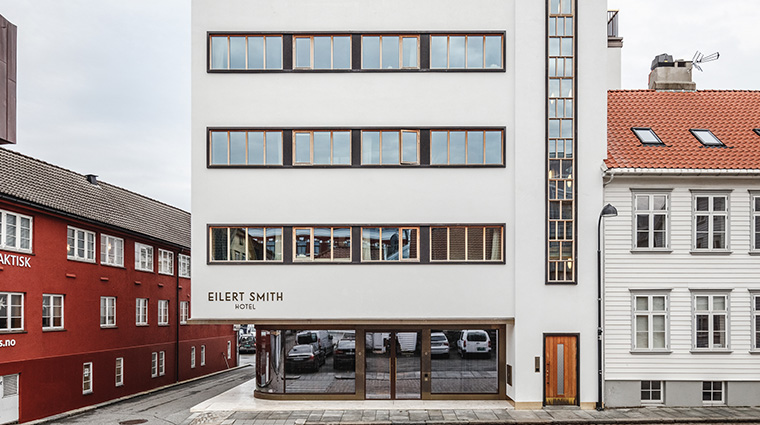
Built in 1937 to house agricultural cooperative Rogaland Felleskjøp, Eilert Smith Hotel takes its name from the architect behind its distinctive curves and geometric forms. Eilert Smith helped shape Stavanger’s functionalist architecture in the late 1930s, and the building retains its curved concrete facade and horizontal bands of windows. Its conversion into a 12-room hotel preserved the original foundations and architectural drawings. Wood, brass, marble and natural stone give the renovated spaces a contemporary finish.
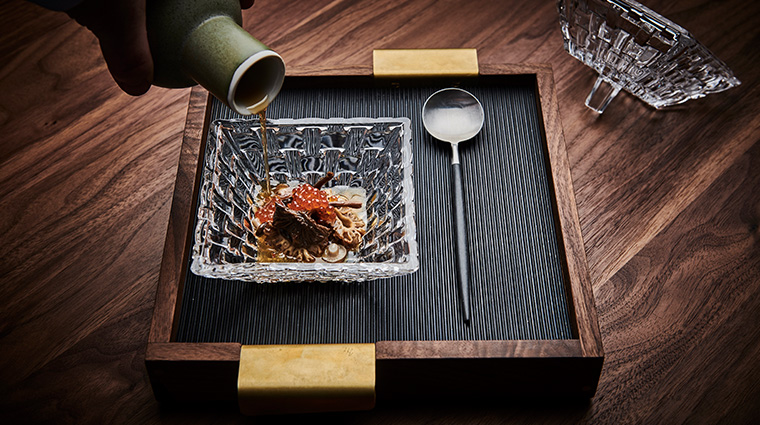
That attention to craftsmanship extends to the guest experience, where Norwegian art and locally sourced touches connect the boutique hotel to its surroundings. Chocolates made by onsite restaurant RE-NAA accompany locally roasted coffee and tea from a neighborhood shop, while breakfast arrives in the room, prepared to order and shaped by the seasons.
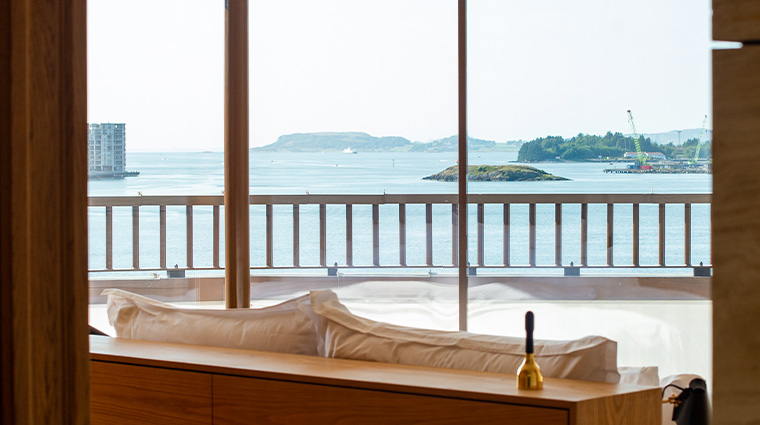
The city is just as easy to savor beyond the luxury hotel: a stroll leads to Øvre Holmegate, where colorful exteriors house lively bars and restaurants, while the nearby waterfront opens onto boat trips through Norway’s fjords. For a day of land exploration, the hike to Preikestolen (or Pulpit Rock) trades the city streets for dramatic views over Lysefjord.
Built in 1937 to house agricultural cooperative Rogaland Felleskjøp, Eilert Smith Hotel takes its name from the architect behind its distinctive curves and geometric forms. Eilert Smith helped shape Stavanger’s functionalist architecture in the late ...